Consumer Adoption Analytics: Peer-Reviewed Socio-Psychological Modeling
An explanatory sequential mixed-methods study modeling the intergenerational constraints of Filial Piety, Family Responsibility, and Digital Exclusion in the silver economy.
The Touristic Mobility Gap
Challenging Neoliberal Homogeneity
Modern discourses on the silver economy frequently commodify seniors as a single, homogeneous source of tourism demand, assuming individualistic agency, physical mobility, and self-actualizing leisure. This Western-centric lens, however, systematically ignores the collectivist intergenerational dependencies and family-oriented constraints that govern aging populations in Eastern contexts. In China, senior travel decision-making is rarely an act of solitary indulgence; it is a deeply negotiated and socially constructed dynamic shaped by ancestral duty, family caregiving loads, and sudden structural barriers in digital transaction systems.
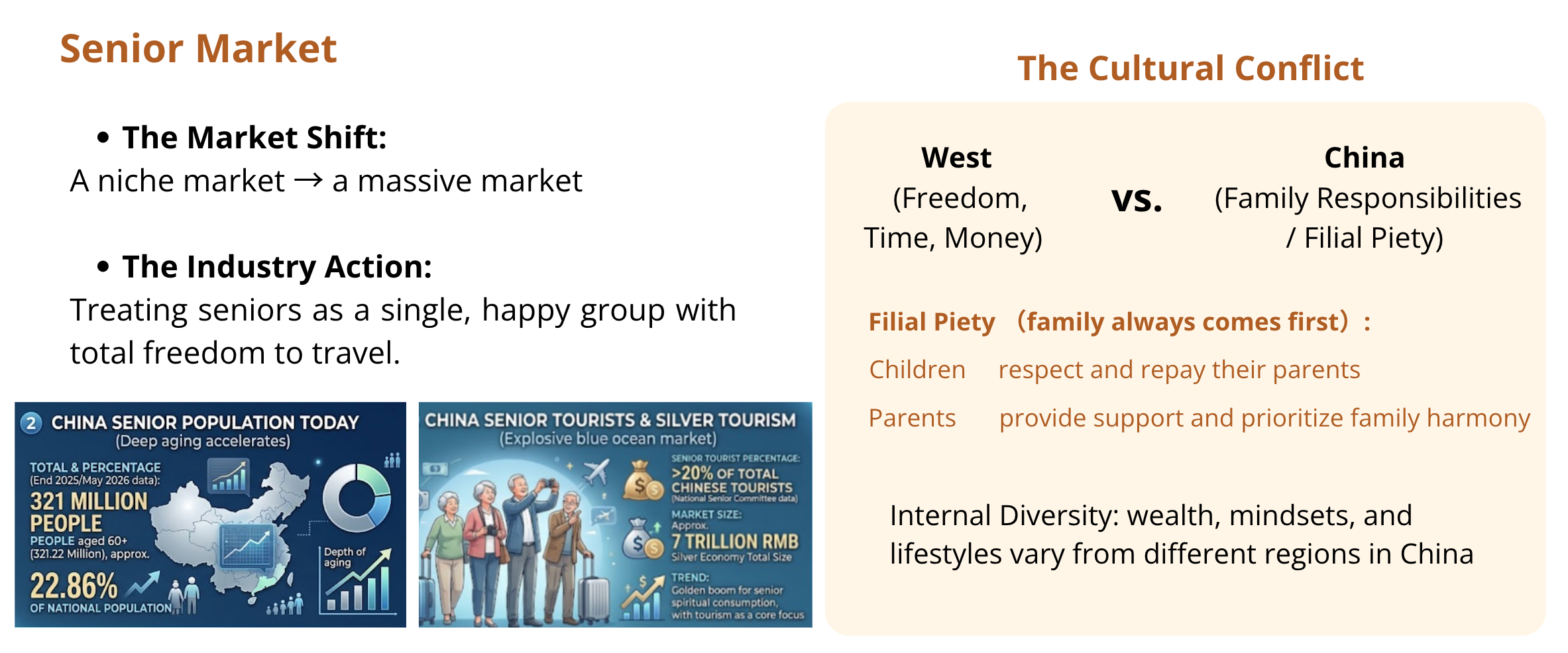
The Dual Constraints: Filial Piety & The Digital Divide
Older adults are caught in a structural "double-edged sword." On one hand, Filial Piety acts as a powerful motivator where children actively sponsor, coordinate, and encourage parental travel as a cultural expression of gratitude. On the other hand, the rapid speed of digital transformation (such as paperless ticketing, health code tracking, and mobile-only booking) has created a steep Digital Divide. When luxury complexes like Therme or premium travel agencies digitize their checkout funnels entirely, they inadvertently erect cognitive barriers that exclude older consumers, turning an act of intended care into one of digital alienation.
Extended Planned Behavior
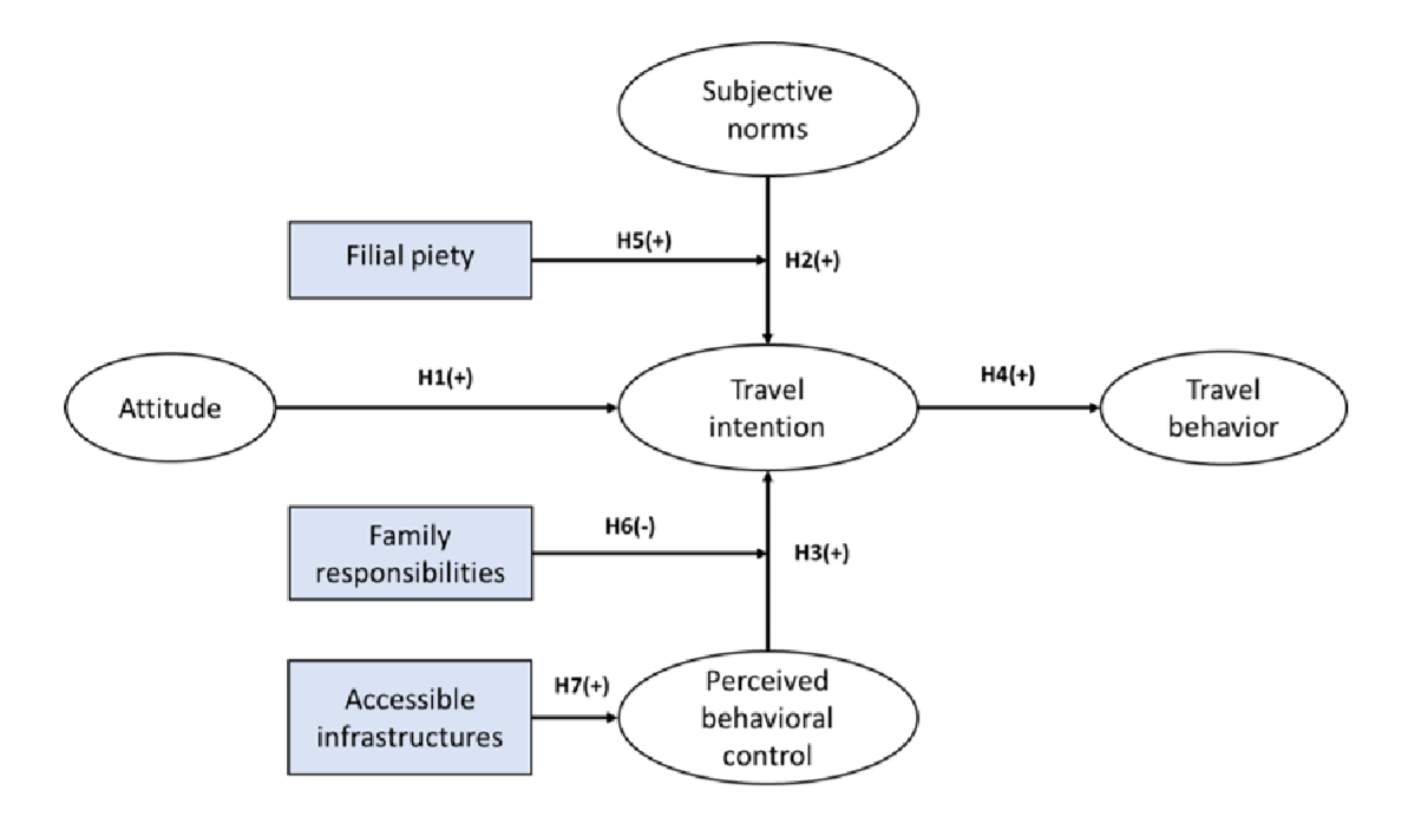
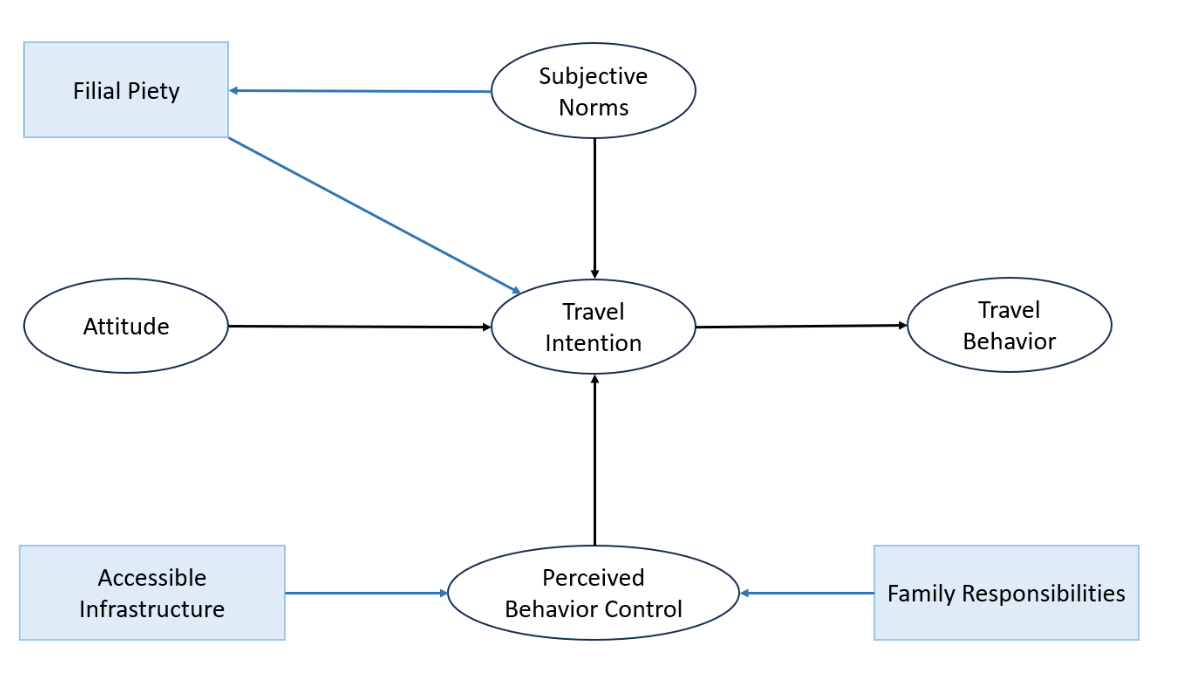
To empirically model how these socio-cultural forces suppress or promote actual travel intention, this peer-reviewed study extended the classic Theory of Planned Behavior (TPB). Rather than treating cultural obligations and technical barriers as external, non-modeled moderators, we integrated Filial Piety (FP), Family Responsibility (FR), and Digital Exclusion (DE) directly as core antecedent constructs influencing Perceived Behavioral Control (PBC) and Behavioral Intention (BI).
Theoretical Path Mechanics
Subjective Norms (social expectations) shape travel intention, but are heavily mediated by Filial Piety, acting as a social signaling and financial enablement mechanism.
Family Responsibility (such as caring for grandchildren or elderly spouses) acts as a powerful negative antecedent, directly depleting Perceived Behavioral Control.
The Second-Level Digital Divide (lack of technical skills) creates psychological anxiety, actively lowering senior users' perceived control over transactions.
PLS-SEM Verification
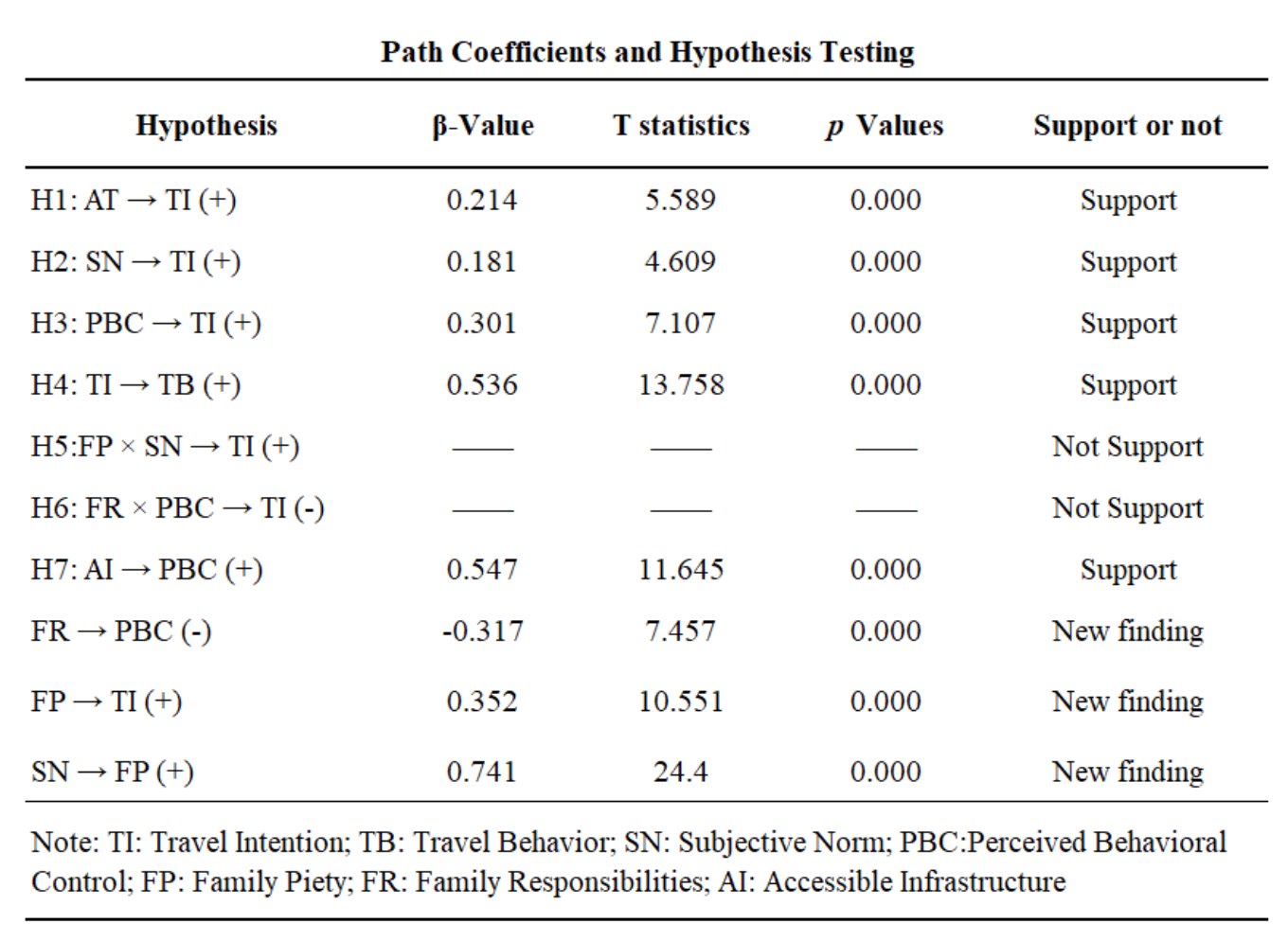
Using an explanatory sequential mixed-methods design, we analyzed a quantitative dataset of 358 valid survey responses in SmartPLS 4.0, supported by 20 qualitative interviews processed in NVivo. The structural model achieved high explanatory power, revealing that caregiving expectations and system complexity act as structural suppressors on travel behavior.
{
  "composite_reliability_cr": "0.934",
  "average_variance_extracted_ave": "0.780",
  "path_family_responsibility_to_pbc": "-0.317",
  "hypothesis_h7_infrastructure_support": "0.547 (Confirmed)"
}
Typology of Senior Travelers
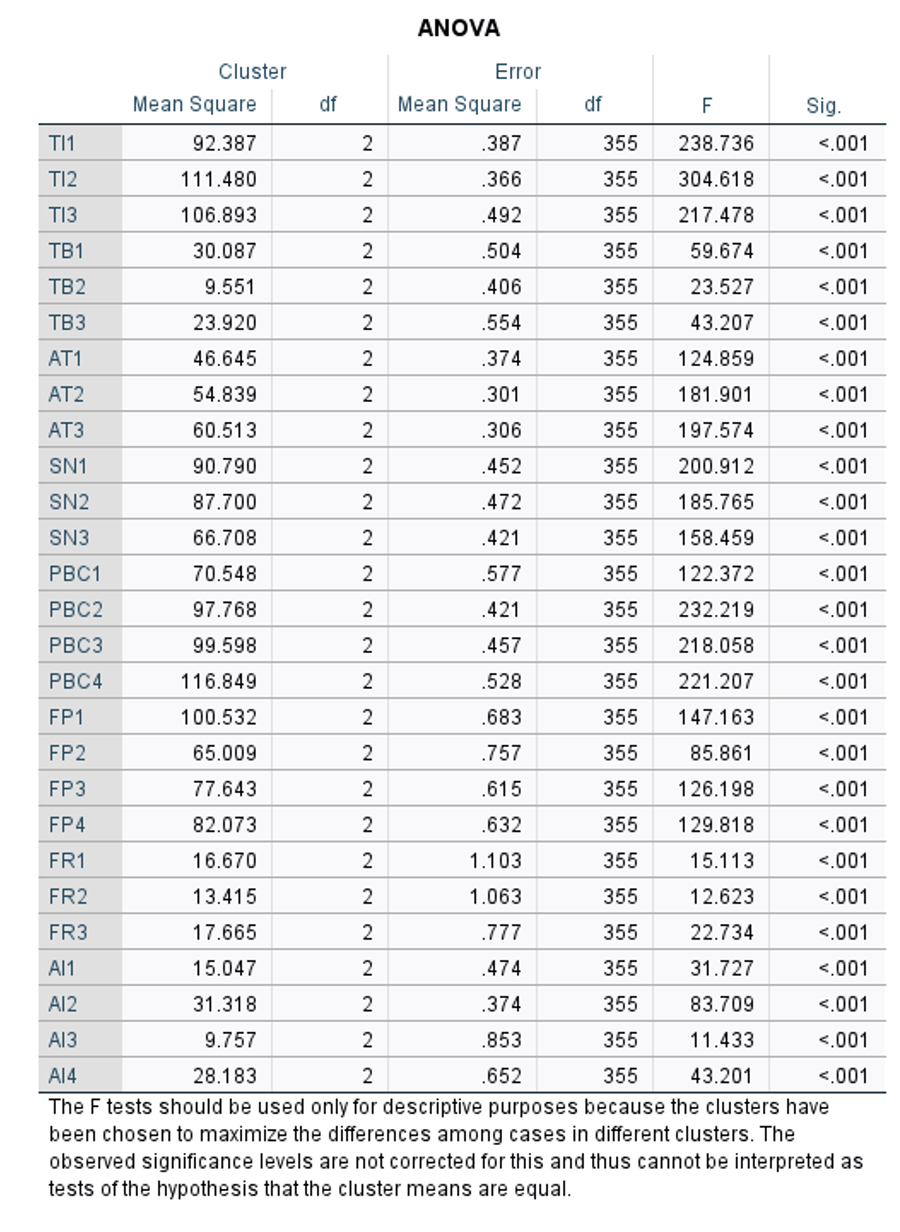
Through hierarchical cluster modeling and variance checks, the research deconstructed the homogeneous "Silver Market" into three highly distinct psychological typologies:
Cluster 1: Modernists (48.9%)
Driven by lifestyle continuation and personal self-actualization. They actively negotiate family boundaries to preserve travel independence and leverage high digital self-efficacy to book high-speed rail lines independently. For them, travel is considered a necessary wellness investment.
Cluster 2: Pragmatists (44.7%)
This group bifurcates into two distinct sub-cohorts:
The Family Guardian (Type I) undertakes travel purely to maintain family cohesion, undergoing deep emotional labor and altruistic anxiety even while on-site.
The Structurally Constrained (Type II) desires personal travel but is blocked by high time poverty and a precautionary savings mindset (keeping emergency funds for grandchildren).
Cluster 3: Traditionalists (6.4%)
Bound by a strong scarcity mindset, they view personal travel as a moral leisure guilt. They are deeply isolated by the digital divide (fear of booking system errors) and exhibit strong topophilia, finding total satisfaction in domestic immobility.
Inclusive Design Blueprint
To achieve "Hospitality Excellence for All," these statistical findings must translate directly into concrete UI requirements and experience systems:
Dismantling Emotional Labor
For Pragmatist Guardians, develop turnkey intergenerational group packages that provide tailored, low-exertion family activities, alleviating constant caregiver coordination load.
Bridging the Digital Exclusion Divide
For Traditionalist cohorts, preserve non-digital booking interfaces as a matter of basic equity. Implement dynamic, large-font typography scaling, automated form caching, and secondary parent-child purchase authorization handshakes.

Strategic Retrospective
"Data is cold commercial physics, whereas consumer psychology is the gravity equation behind it. A top strategist never gets lost in SPSS values because they know that behind every decimal point sits a real human, experiencing anxiety from hostile product interactions."
Core Capabilities Enhanced
- Advanced PLS-SEM Modeling: Proven ability to execute multiple linear regressions, structural equation modeling, ANOVA validations, and bias checks.
- Qualitative NVivo Coding: Specialized in transcript parsing, thematic matrices coding, and extracting deep behavioral context behind quantitative patterns.
- Inclusive Product Strategy: Translating dry statistical thresholds into actionable, high-conversion accessibility guidelines and B2B2C product maps.