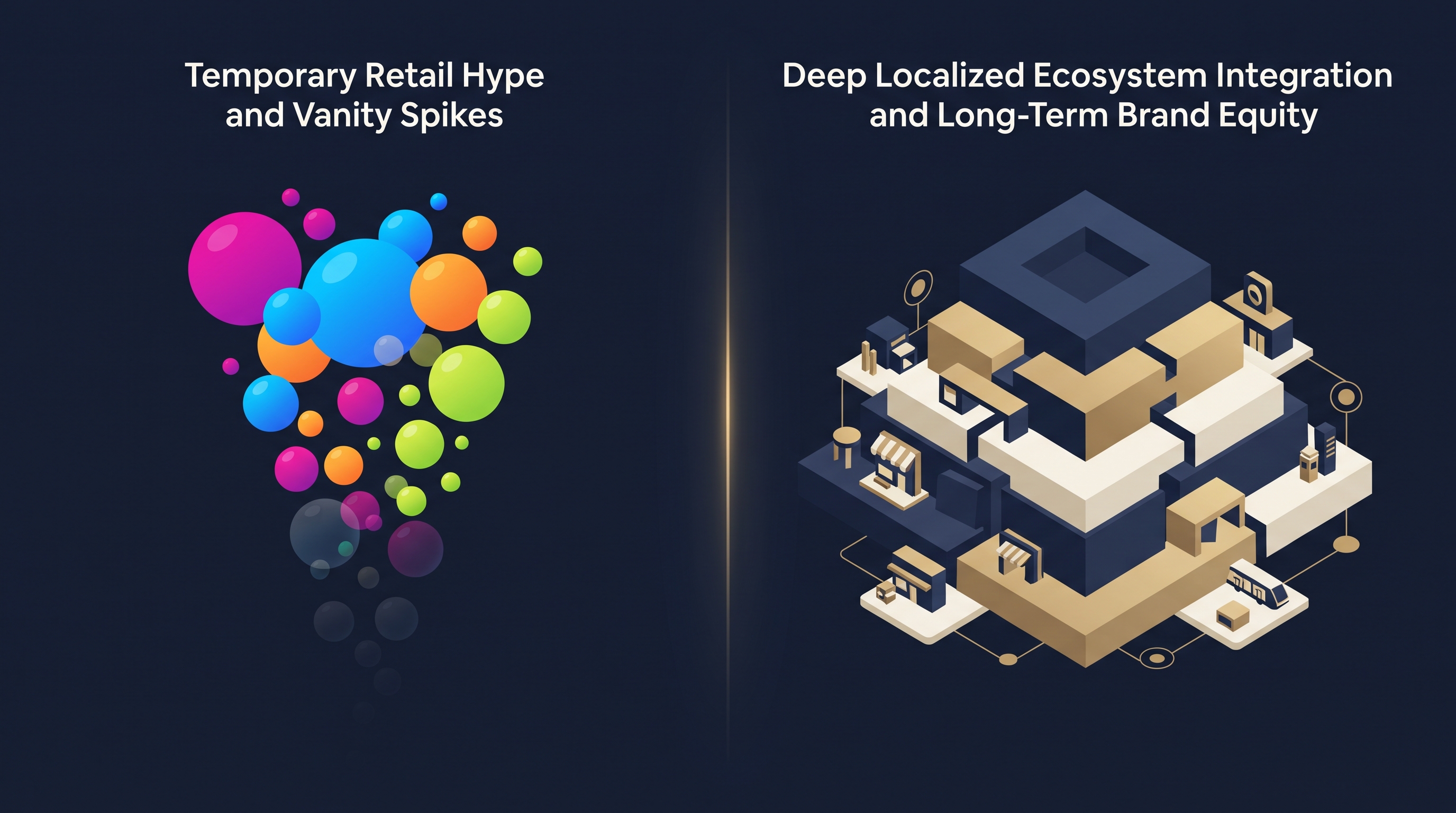
Standing outside a flagship pop-up space in Central London, watching queues snake around the corner, aesthetic photos flooding Instagram, and foot-traffic metrics breaking internal records, many cross-border expansion teams celebrate prematurely. They mistake initial curiosity for product-market fit (PMF).
Yet, once the opening-week hype evaporates and the quarterly P&L is audited, a cold commercial reality sets in: repeat purchase rates flatline, retail buyers at major UK department stores stop replying, customer acquisition costs (CAC) soar, and inventory sits idle in bonded warehouses. The brand’s tangible contribution to recurring enterprise value and sustainable local revenue remains negligible.
"Why do so many well-funded Eastern market leaders falter when expanding into the UK, turning ambitious internationalisation into expensive, budget-burning vanity projects?"
In a mature, highly discerning consumer market like the UK, cross-border expansion can no longer rely on simple "product arbitrage" or literal language translation. When brands fail to bridge deep cultural nuances, regulatory rigor, and local channel dynamics, their domestic prestige translates into friction rather than traction. To scale sustainably from 0 to 1, market entry must move beyond passive catalog replication and be engineered as a strategic, data-driven, and highly localized go-to-market (GTM) machine.
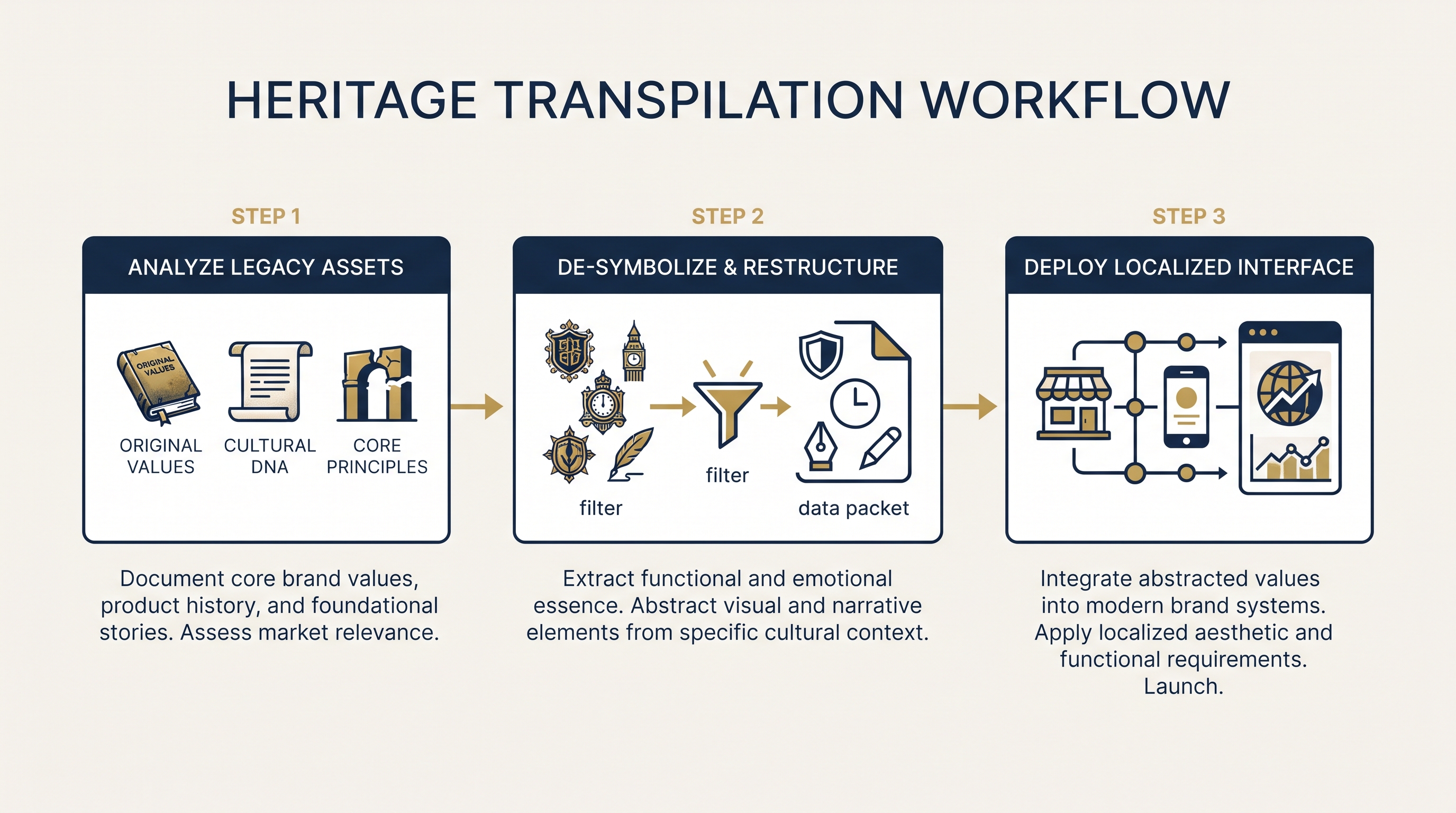
De-Symbolisation: The "Secondary Compilation" of Heritage
The "Orientalist Cliché" Trap
- • Over-indexing on Exotica: Relying on superficial symbols (dragons, calligraphy, folklore motifs) that alienate mainstream British consumers into viewing premium items as mere novelty souvenirs.
- • Context Collapsing: Domestic narratives rooted in historical reverence or national pride lose emotional currency in Western retail spaces where sustainability and functionality matter more.
Narrative Transpilation
- • Universal Values over Symbols: Isolate core brand values (e.g., mindfulness, slow ritual, precision craft) and anchor them to modern British urban lifestyles (e.g., anti-burnout, holistic wellness).
- • Contextual Framing: Shift messaging from historical representation to daily functional fit (e.g., positioning traditional herbal items as adaptogenic focus boosters for City professionals).
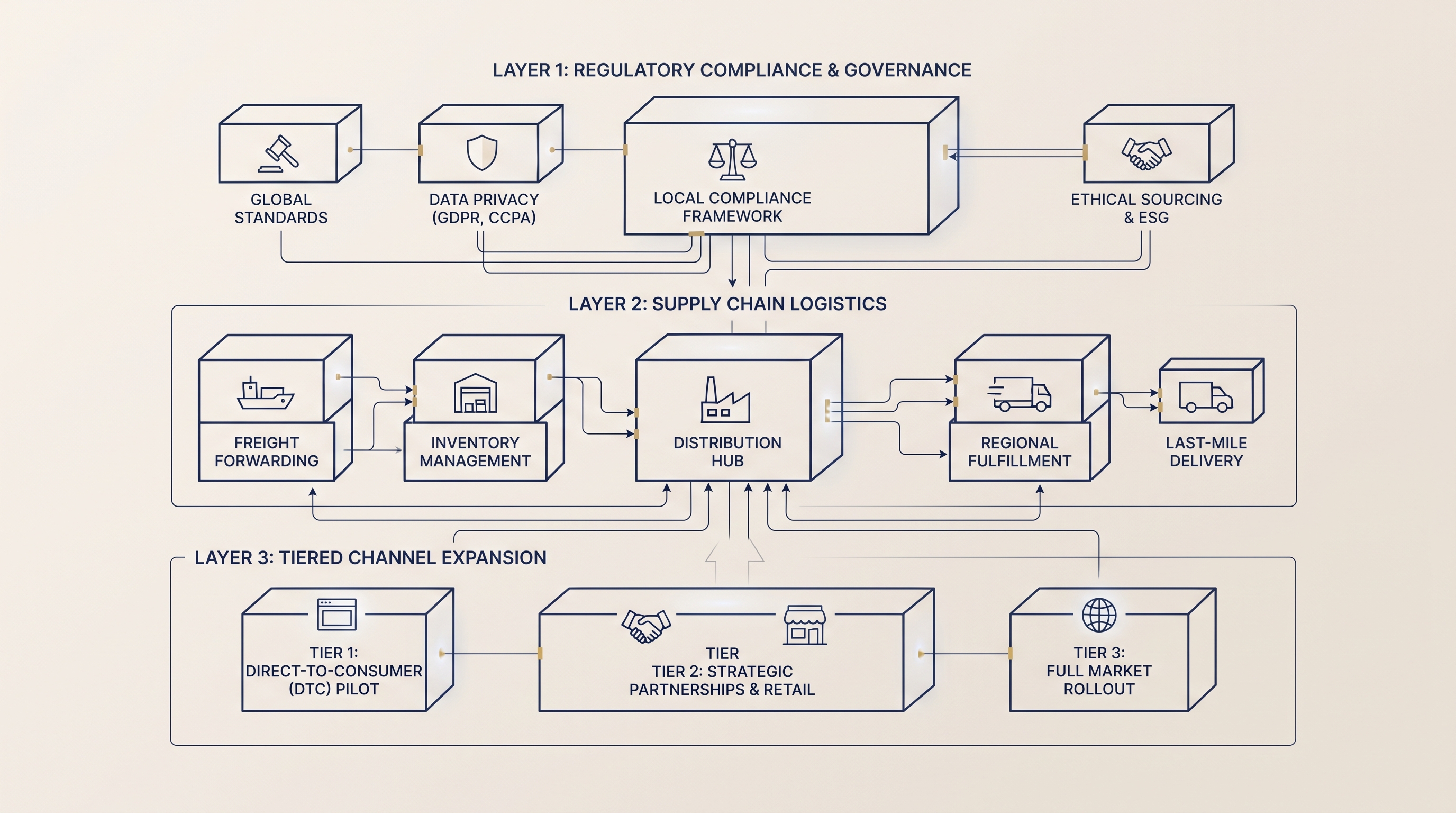
Operational Resiliency: Navigating Compliance, Supply Chains, and Channels
Operational Vulnerabilities in Foreign Expansion
- • Post-Facto Compliance Shock: Treating UK regulations as an afterthought, leading to costly product recalls, impounded shipments, and sudden de-platforming.
- • Fragile Logistics: Relying on long-lead overseas freight with zero local buffer stock, causing fatal stockouts during marketing peaks.
- • Tier-1 Channel Misalignment: Pitching legacy department stores blindly without understanding slotting fees, strict ESG audits, and margin expectations.
Strategic Execution
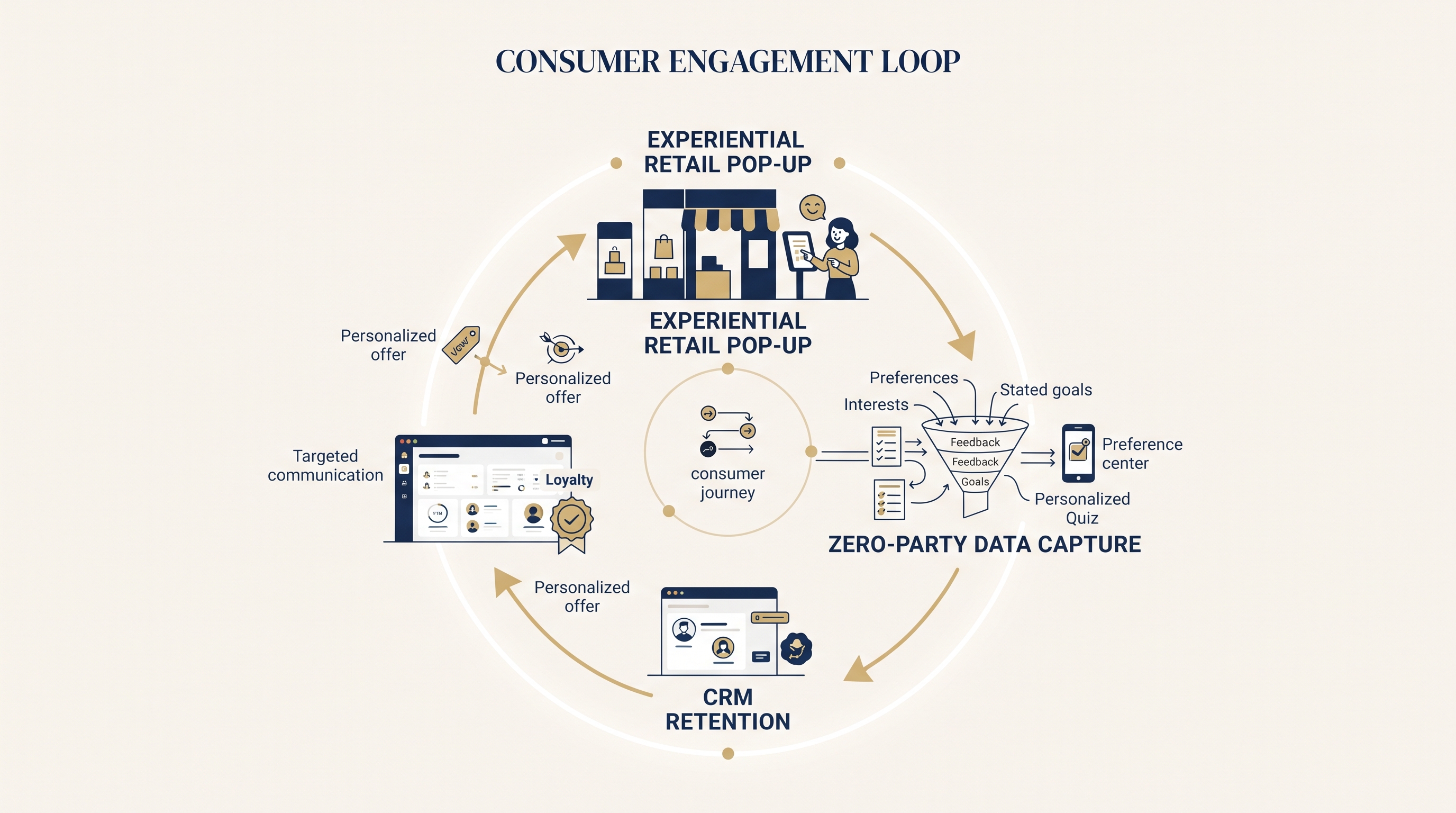
Reconstructing the Consumer Engagement Framework
Ad-Fatigue & Broadcast Cynicism
UK consumers are among the most commercially cynical globally. High-spend, top-down social ads create fleeting impressions rather than loyalty, while isolated PR pop-ups often fail to capture zero-party data.
Immersive Community & Loop Retention
- • Experiential Retail Pop-Ups: Transform short-term spaces into sensory education galleries featuring diagnostic kiosks to capture zero-party CRM data.
- • Hyper-Local Creator Networks: Partner with micro-curators (artisans, wellness experts) for authentic daily integration rather than mass celebrity endorsements.
- • Closed-Loop Retention: Nurture offline visitors into VIP digital subscribers via tailored post-visit sequences and community masterclasses.
Core Monitoring Matrix: From Vanity Drops to Enterprise Scale
To ensure cross-border expansion remains disciplined and profitable, executive teams must abandon domestic vanity metrics and implement hard localized KPIs across the funnel:
| Funnel Stage | Traditional Vanity Metric (To Discard) | Core Localised KPI (To Enforce) | Benchmark Target |
|---|---|---|---|
| Top of Funnel (ToFu) | Gross Social Impressions / Reach | Tier-1 Local Media Sentiment & EMV | >60% positive qualitative sentiment |
| Middle of Funnel (MoFu) | Total Foot Traffic / RSVP Count | Offline-to-Online (O2O) Data Capture Rate | 25% – 40% opt-in conversion at pop-up |
| Bottom of Funnel (BoFu) | Opening-Day Gross Merchandise Value (GMV) | 90-Day Organic Repeat Purchase & Sell-Through | >35% direct repeat rate; >70% sell-through |
| Enterprise Health | Single-Campaign ROI | Landed Margin Contribution & Net CAC:LTV | LTV:CAC ratio > 3:1 within 12 months |
Conclusion
Expanding an Eastern brand into the UK and wider European landscape is fundamentally not an exercise in short-term traffic acquisition or wholesale dropshipping. It is an exercise in strategic translation, operational resilience, and institutional empathy.
When international operators move past superficial cultural tropes, respect the non-negotiables of local compliance, and replace vanity PR stunts with rigorous, community-led engagement loops, cultural heritage ceases to be an obstacle. Instead, it becomes the brand's most defensible commercial moat—turning transient foreign intrigue into a deeply rooted, highly profitable local footprint.